

Injectable treatments around the eyes, by an ophthalmologist
Treating the area around the eye is not the same task as treating the lower face. At Skin & Vision Clinic these treatments are performed by a BIG-registered ophthalmologist who operates on this anatomy every week. Consultations in English.
Injectable treatments around the eyes
The area around the eye is dense with fine muscle — principally the orbicularis oculi, the ring of muscle that closes the lid — layered over the structures that protect the eye and drain its tears. Injectable muscle-relaxing treatment in this region is not the same task as treating the lower face, and the consequences of getting it wrong are not cosmetic.
At Skin & Vision Clinic these treatments are carried out by Dr. Kloos, a BIG-registered ophthalmologist with oculoplastic specialisation. BIG registration is the Dutch government register of qualified healthcare professionals, and confirms a verified, regulated medical qualification.
How it works
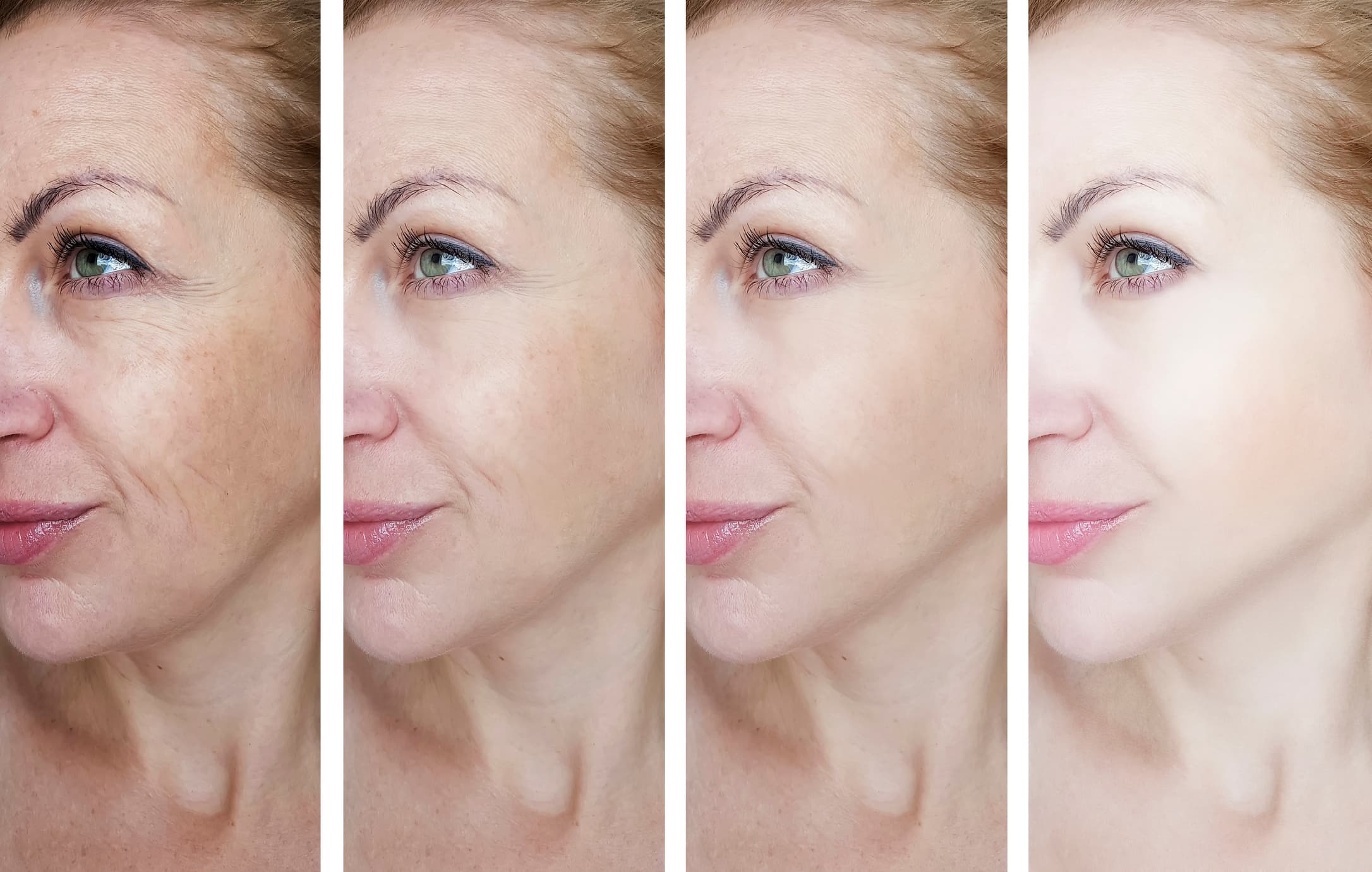
A purified muscle-relaxing protein is injected in very small quantities into specific muscles. It temporarily reduces the signal from nerve to muscle, so the muscle relaxes and the lines it creates soften. The effect develops over roughly two weeks, lasts about three to four months, and is fully reversible — as the effect wears off, the muscle returns to normal.
Why an ophthalmologist for this area
An inexperienced injector working near the eye risks a drooping eyelid, incomplete lid closure, dry eye, or asymmetry — because the muscle that was relaxed was not the one intended, or the product diffused into the levator.
Dr. Kloos works with this anatomy in surgery every week. That is a different basis for judgement from a general aesthetic practice: knowing where the levator sits relative to the orbicularis, how the tear film behaves when blink strength changes, and when a patient's eyelid position makes treatment inadvisable in the first place.
Cosmetic treatment areas
- Frown lines between the brows (glabella)
- Forehead lines
- Crow's feet at the outer corner of the eye
- Brow lift, by selectively relaxing the muscles that pull the brow down
- Bunny lines across the bridge of the nose
- Chin dimpling
- Masseter, for jaw clenching and teeth grinding
Medical indications
This is where an ophthalmologist's involvement matters most, and these are genuine medical conditions rather than aesthetic concerns:
- Blepharospasm — involuntary, forceful closure of the eyelids, which in severe cases leaves people functionally unable to see.
- Hemifacial spasm — involuntary twitching affecting one side of the face.
- Epiphora — excessive watering of the eye, where injectable treatment can reduce tear production.
What a treatment involves
- 1.Consultation. Your goals, medical history, current medication and eyelid position are assessed, and you are told plainly what is and is not achievable.
- 2.Treatment. The injections take 15 to 30 minutes. A fine needle is used; most people describe brief pinpricks rather than pain. You can return to normal activities the same day.
- 3.Follow-up after two weeks. The effect is assessed once fully developed, and fine adjustments made if needed.
Avoid rubbing the treated area, strenuous exercise and lying flat for the rest of the day. Some small bruising at injection sites is normal.
When this is not appropriate
Treatment is not carried out during pregnancy or breastfeeding, in certain neuromuscular conditions, or where there is active infection at the injection site. Where your eyelid already sits low, relaxing the brow muscles can make that more noticeable — a reason we assess eyelid position before treating, and occasionally advise against it.
What this costs
Prices are published and quoted per area treated. You receive a personal quote at your consultation, after your treatment plan has been agreed. Medical indications such as blepharospasm may qualify for reimbursement from Dutch health insurance where a medical need is established; your insurer assesses this individually.
Consultations in English, in Amsterdam
Skin & Vision Clinic is at Louwesweg 6k in Amsterdam. Consultations are held in English, and you do not need to speak Dutch. A referral is not required for a cosmetic consultation, though one from your GP is the usual route where a medical indication is involved.
Frequently asked questions about injectable treatment
Do I need to speak Dutch for a consultation?
+
No. Consultations are held in English and patient information is available in English.
Why have injectable treatment done by an ophthalmologist?
+
The area around the eye is dense with fine muscle layered over the structures that protect the eye and drain its tears. An inexperienced injector risks a drooping eyelid, incomplete lid closure or dry eye. Dr. Kloos works with this anatomy surgically every week.
How long does the effect last?
+
The effect develops over roughly two weeks and lasts about three to four months. It is fully reversible: as it wears off, the muscle returns to normal.
Is the treatment painful?
+
A fine needle is used and most people describe brief pinpricks rather than pain. The session takes 15 to 30 minutes and you can return to normal activities the same day.
Can this treat medical conditions, not just lines?
+
Yes. Blepharospasm (involuntary forceful eyelid closure), hemifacial spasm and epiphora (excessive watering) are treated here. These are medical conditions and may qualify for insurance reimbursement where a medical need is established.
When is treatment not appropriate?
+
Not during pregnancy or breastfeeding, in certain neuromuscular conditions, or with active infection at the injection site. Where your eyelid already sits low, relaxing the brow muscles can make that more noticeable — a reason eyelid position is assessed first.
Is a referral needed?
+
Not for a cosmetic consultation. A GP referral is the usual route where a medical indication is involved.
- BIG-registered ophthalmologist
- In-depth anatomical expertise
- CE/FDA-certified preparations
- Follow-up after 2 weeks
- Duration: 15–30 minutes
- Recovery: Resume activities immediately
Questions about this treatment?
Dr. Kloos will gladly discuss your wishes and options during a personal consultation.