
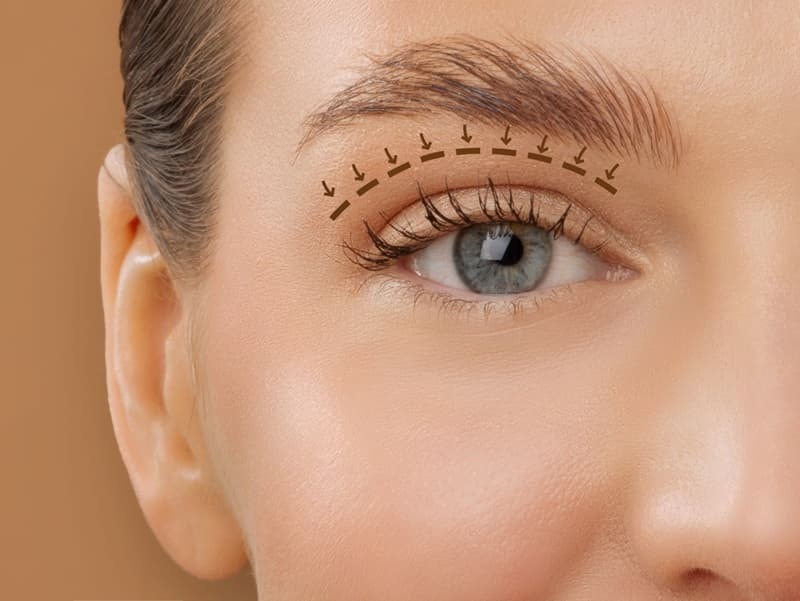
Droopy eyelids: where they come from and what can be done
A droopy eyelid comes either from excess skin or from the eyelid muscle. That difference decides which treatment works — and whether your insurer pays.
What are droopy eyelids?
Droopy eyelids means the upper eyelid sits lower than it used to, so the eye looks smaller or more tired. It usually shows first at the outer corner, and often on one side more than the other — perfectly symmetrical eyelids do not exist.
It is almost always gradual. People notice it in a photograph, or because eye make-up no longer stays put once the fold of skin covers it. As soon as the eyelid reaches the lash line it can also take away upward vision. That is the point at which the complaint moves from cosmetic to medical.
At Skin & Vision Clinic you are examined by a BIG-registered ophthalmologist. That is deliberate: the eyelids protect the eye, and any procedure that lifts the eyelid also changes how the eye closes and how the tear film spreads.
Two very different causes
They look the same from the outside and are constantly confused, but the treatment differs fundamentally. They also occur together. If only skin is removed when the muscle was the problem, the eye opening stays too small and the result disappoints.
dermatochalasis
Excess skin
The eyelid margin itself sits at the right height, but a fold of skin hangs over it. The skin of the upper eyelid is the thinnest on the body and is the first to lose its elasticity. Once the fold reaches the lashes it can also cut into your upward and outward vision.
Treatment: Upper eyelid correction
The excess skin is removed. The scar falls inside the natural eyelid crease.
More about this procedure →ptosis
The eyelid muscle
The eyelid margin itself sits too low, because the levator muscle delivers less power or has detached from the tarsal plate. The eye looks smaller and tired. Many people compensate without noticing, by raising the eyebrow or tilting the head back, which brings neck and headache complaints over time.
Treatment: Ptosis correction
The levator muscle is repaired or shortened so the eyelid margin returns to height.
More about this procedure →Not sure whether it is skin or muscle?
During an eyelid consultation, Dr Kloos examines and measures both causes before recommending treatment.
What makes eyelids droop?
Ageing
By far the most common reason. The skin loses elasticity and the levator tendon slowly stretches. It is almost always gradual, over years.
Family history
Droopy eyelids run in families and can start relatively young. Sometimes one eyelid has sat lower than the other since birth.
Weight on the eyelid
Swelling, scar tissue or earlier surgery can pull the eyelid down mechanically.
An underlying condition
Less often the cause lies in nerve supply or in a muscle disease. That needs investigating first, not operating on.
When to have it looked at sooner
Did the eyelid drop suddenly, does it vary through the day, or is there double vision or an abnormal pupil alongside it? A neurological or muscular cause may lie behind it, and that needs investigating first. Contact your GP or reach us directly.
Is it covered?
It comes down to one question: does the eyelid demonstrably restrict your field of vision? If yes, Dutch basic insurance can cover the procedure, but only with your insurer's approval in advance. If no, the procedure is aesthetic and you pay for it yourself.
The visual field is measured objectively, not estimated. During the consultation Dr. Kloos records how low the eyelid sits and what that does to your vision. That measurement is what your insurer wants to see.
Note that a covered procedure counts against your own risk (eigen risico).
What does correcting droopy eyelids cost?
Consultation and the aftercare visit at which sutures are removed are included. These are guide prices — every situation calls for its own treatment plan, and you receive a written quote at your consultation before committing to anything. See all eyelid surgery pricing.
Droopy eyelids in brief
What causes a droopy eyelid?+
In most cases ageing: the skin of the upper eyelid loses elasticity and the levator tendon stretches. Family history, mechanical weight from swelling or scarring, and occasionally an underlying nerve or muscle condition also play a role. Which of these it is determines which treatment makes sense, so it is measured during the consultation.
How are droopy eyelids corrected?+
With minor surgery under local anaesthesia. If the complaint comes from excess skin, an upper eyelid correction removes it. If it comes from the eyelid muscle, a ptosis correction repairs the levator. Both take around an hour and you go home the same day.
When is a droopy eyelid medical rather than cosmetic?+
When the eyelid demonstrably restricts your field of vision. That is measured objectively, not estimated. Signs that point to it: the feeling of looking through a slit, difficulty reading or driving, or catching yourself raising your eyebrow in order to see. If the eyelid does not restrict vision, the procedure is aesthetic.
Are droopy eyelids covered by Dutch health insurance?+
Only with an established medical indication, where the drooping eyelid demonstrably restricts the visual field. Your insurer assesses this in advance and must approve the procedure before it takes place. An aesthetic eyelid correction is not covered. Note that a covered procedure counts against your own risk (eigen risico).
What does droopy eyelid surgery cost?+
An upper eyelid correction on both eyes costs € 1.089, consultation and aftercare included. A ptosis correction costs € 1.270,50 for one eye and € 2.238,50 for both. These are guide prices; you receive a written quote at your consultation.
How long does recovery take?+
Sutures come out after about a week. Bruising and swelling are most obvious in the first week and then subside. Most people prefer not to be seen for around two weeks, and the final result settles over a few months.
When should I have it looked at quickly?+
If the eyelid dropped suddenly, if it varies through the day, or if double vision or an abnormal pupil comes with it. These can point to a neurological or muscular cause that needs investigating first. Contact your GP, or us, in that case.
Have your eyelids measured
At your consultation Dr. Kloos establishes whether your complaint comes from the skin or from the eyelid muscle, and what that means for treatment and cover.